
Getting Watauga County Court Records
The free route comes first. The North Carolina eCourts Portal offers Smart Search. Smart Search can surface public Case Summary and Register of Actions information for eligible cases. Treat it as a finding tool. Not every filed document can be downloaded from it. When a public case needs a closer look, the Judicial Branch says each Clerk of Superior Court office provides a public self-service terminal. Watauga County visitors can use that terminal during the Clerk’s posted business hours.
For an actual Watauga County case file, go to the Clerk of Superior Court. Ask for a specific record, not a general report. Include the county, the case number if you have it, the case category, the caption when it applies, and the document or docket item you want. Also give the date range. Say whether you need an ordinary copy, a certified copy under seal, or an exemplification. The Clerk’s main line can route a records question. The office publishes no Watauga-specific promise on email copies, mail requests, identification, or turnaround.
- Use the Portal or the Watauga County terminal to identify the public case and its Register of Actions.
- Write down the case number, court division, document name, and relevant date before contacting the Clerk.
- Call or visit the Clerk’s counter to ask whether the specific record is public and what form of copy is available.
- Make a focused request for that existing record and state whether plain, sealed certificate, or exemplification is required.
- Confirm the current total and delivery options with the Clerk before ordering or paying.
The Judicial Branch court-records guide lays out the statewide terminal and copy route.
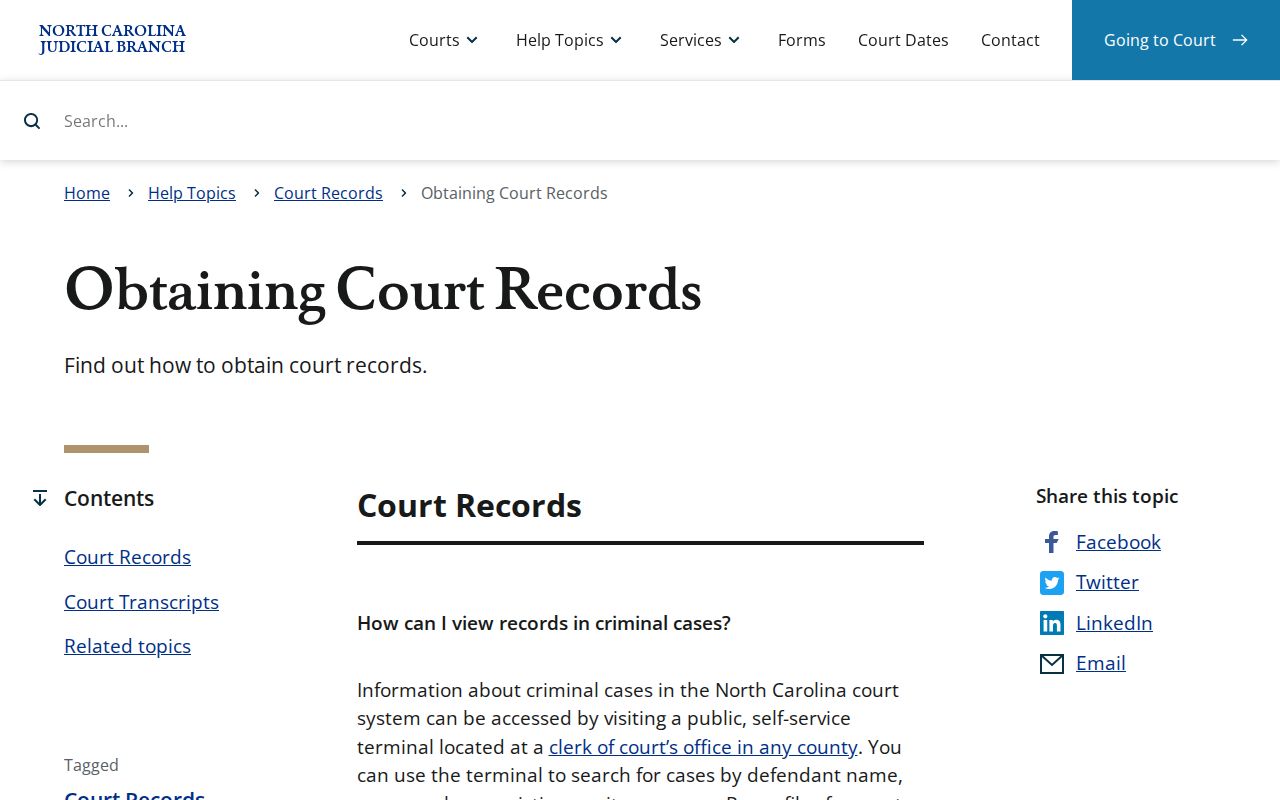
That statewide route covers Watauga County because the local Clerk keeps the county trial-court files. It does not create a separate county records portal.
Watauga County Clerk File Custody
The Watauga County Clerk of Superior Court holds records for Superior Court District 35. It holds District Court District 35 records too. The office’s reach is wide: estates, probate administration, adoptions, foreclosures, guardianships, competency matters, partitions, small claims scheduling, warrants, subpoenas, fines, and costs. Name the actual category in a request. Don’t assume every public file sits under a broad civil or criminal label.
The custody line matters here. The NCAOC public-record request page states plainly that the Administrative Office of the Courts is not the custodian of court records or case information. NCAOC cannot hand over Watauga County case files. A county civil, criminal, estate, special-proceeding, or traffic file belongs to the Watauga Clerk. NCAOC requests cover only that administrative office’s own records.
Court hours run 8:00 a.m. to 5:00 p.m., Monday through Friday. The courthouse has a King Street security checkpoint, and the official courthouse page notes an accessible rear entrance from the parking lot. Bring the case details your request needs. Follow the rules for restricted spaces.
Watauga County Court Record Types
Watauga County public court material spans the Register of Actions for a case, filed public documents, orders, judgments, and the clerk-maintained indexes that tie them together. The clerk-maintained indexes tie them together. The file type drives both your request language and the access rule. A docket event may show that a motion, hearing, disposition, or payment entry exists. The motion itself, a notice, an exhibit, or an order may need more. It may still require a separate clerk review.
- Criminal and infraction case files in the applicable court division.
- Civil pleadings, orders, judgments, and public case events.
- Small-claims and magistrate matters, including later District Court appeals when public.
- Estate, probate, foreclosure, guardianship, and other special-proceeding files kept by the Clerk.
- Traffic case records and their court payment or disposition entries.
A Watauga County court record is not the same thing as a police incident report. It is not a recorded deed. Nor is it a DMV file. The public case file is the court record the clerk holds. Need a case number or a public event history before requesting copies? Use the county’s Watauga County Case Lookup route.
Watauga County Portal and Terminal Access
Watauga County joined eCourts on July 21, 2025. The official launch notice describes the shift to the Portal, electronic payment services, and File & Serve. The Portal is the public search and viewing layer. File & Serve serves attorneys filing documents, so it is not a copy-request channel for the public. Anonymous Portal searching is free. Registering can save cases, but it does not widen ordinary public access.
Search with the strongest identifier you have. A case number from a notice beats a broad name search every time. When a name search is needed for a lawful case-specific reason, narrow it by Watauga location, filing-date range, case type, and status. The Portal caps results at 200. That limit means you should refine the query, not assume the list is complete. If a public record fails to appear remotely, check the spelling, the case-number format, the date range, the county, and the indexing. Also check any lawful restrictions. Then ask the Clerk about a terminal search.
Note: Converted historical events can show a 12:00 a.m. time after eCourts migration. That time is not reliable proof of an original midnight filing or hearing.
Inside a Watauga County Court Record
A Watauga County Register of Actions is an event index. It is not the full case file. The register can identify the case number, parties, court, case type, status, filed events, settings, and dispositions that are publicly visible. Read each field in context. A status label is administrative information at a point in time. It is not a narrative finding. Nor is it a prediction about how a case ends.
| Case number | The state format joins a two-digit year, case-type code, six-digit sequence, and county identifier. |
|---|---|
| Case Summary | The Portal name often used for the public Register of Actions and its chronological event entries. |
| Case type and status | Administrative labels that help distinguish a matter and should be checked with the most recent public event. |
| Filed documents | Public pleadings, notices, motions, orders, or judgments may be available from the Clerk, subject to access limits. |
| Hearing details | A setting can show a date and event; the notice or court staff confirms attendance instructions and any change. |
Watauga County records can hold information that is masked, redacted, or limited by law. A portal entry never licenses you to publish personal details from a case file.
Watauga County Records After eCourts
eCourts pulled Watauga County into one statewide search space, yet the switch never promised that every paper file would become a readable online document. A Portal event can tell you a record exists while showing none of its contents. So work the Watauga County docket in steps. Find the public event first. Pin down the exact filing it points to. Then ask the Watauga Clerk whether a public copy, a certification, terminal review, or some other local process can get it to you.
The July 2025 conversion also explains odd access gaps near the transition window. It does not prove any case was lost or delayed. When you need an exact historic filing or hearing time, a Watauga County record request should name the event and ask the Clerk which original public source can confirm it.
Fees and Certified Copies
North Carolina's clerk fee statute sets the numbers for Watauga County court records. A plain copy begins with a per-page charge. Certification under seal costs extra. Exemplification is a separate service with its own statutory fee. Tell the Clerk which one you actually need. The terms are not interchangeable. Confirm the total, access status, and current ordering details before you pay.
| Watauga County court-record item | Statutory fee | What it covers |
|---|---|---|
| First copied page | $2.00 | First page of a document copy. |
| Each additional copied page | $0.25 | Additional pages of that document copy. |
| Certificate under seal | $3.00 | A certificate service under seal, distinct from a plain copy. |
| Exemplification | $10.00 | The separate exemplification requested for a record. |
| Criminal-record search | $25.00 | Statutory search fee; confirm scope and availability with the Clerk. |
N.C. Gen. Stat. § 7A-308 is the official fee source.
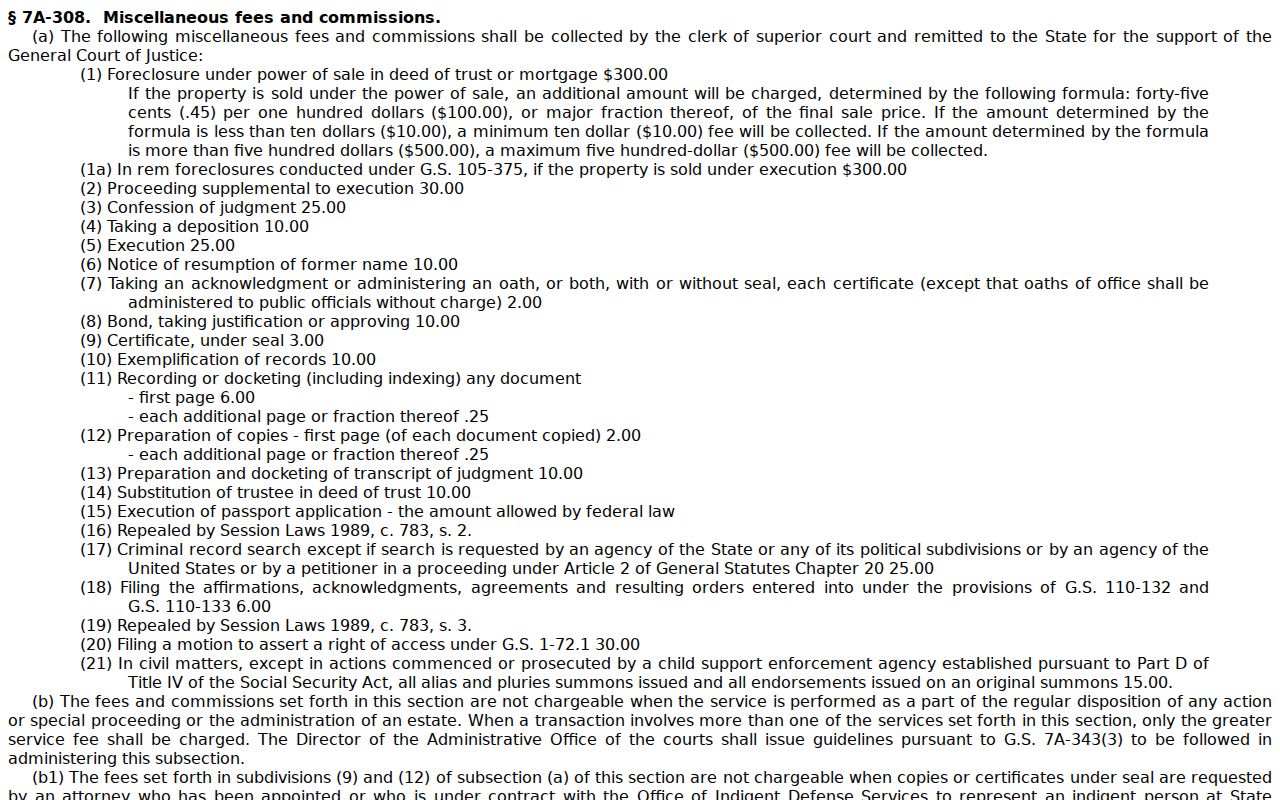
The link goes to the statute behind the Watauga County fee table. It is not a county promise about payment method or delivery timing. See the clerk fee statute for the figures themselves.
Watauga County Clerk of Superior Court
Watauga County Courthouse
842 W. King Street, Suite 13
Clerk’s office listed in Room 117
Boone, NC 28607
828-268-6600
Published hours: Monday through Friday, 8:00 a.m. to 5:00 p.m.
Watauga County Historic Record Limits
Digging into older Watauga County court records calls for a blunt warning. County history materials describe record destruction during Stoneman's raid in 1865. A second loss came in the 1872 courthouse fire. A missing nineteenth-century record therefore proves nothing about whether a proceeding happened. eCourts access cannot repair a historic loss. It cannot promise that an old file survived, or confirm that a surviving paper record was ever scanned.
Watauga County history resources point to Digital Watauga as a local preservation project worth checking.
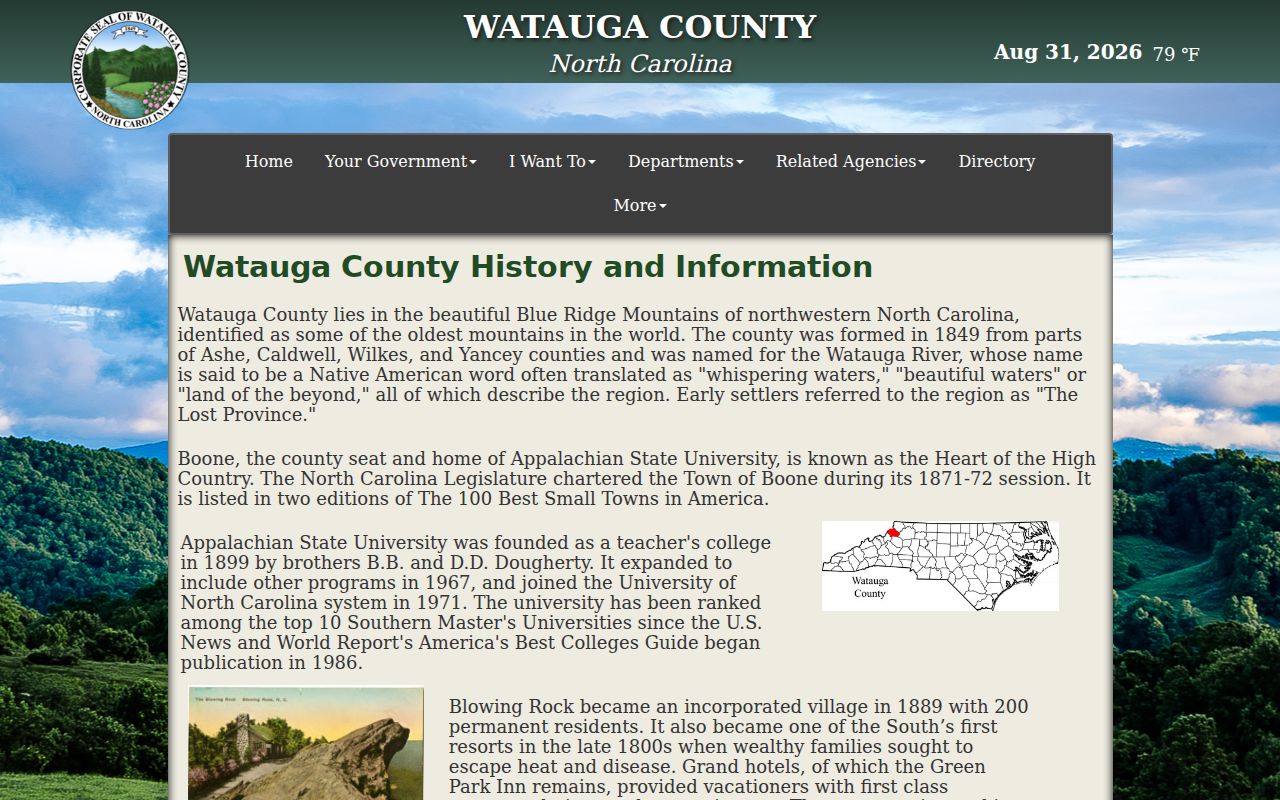
Digital Watauga makes a useful historical lead. Still, the Watauga Clerk stays the official source for a modern county court file and for guidance on surviving court indexes.
Sealed Records and Public Access
The baseline rule in Watauga County is public inspection of clerk-maintained records, files, dockets, and indexes during office hours. A law or court order can restrict that access. The baseline has limits. Juvenile matters, sealed cases, expunged records, and involuntary-commitment files all follow separate rules. A missing Portal result can mean any of those boundaries. An indexing quirk or a county mismatch is possible. So is a record that simply is not remote yet.
Never read a missing result as a conclusion about a person or a case. If lawful access seems uncertain, ask the Clerk. Qualified counsel can also advise on the proper process. Casting a wider net is not the answer. Leave family names, municipal police files, and commercial record sites out of it.
Public-access rules for Watauga County records:
N.C. Gen. Stat. § 7A-109 requires the Clerk to maintain records, files, dockets, and indexes and establishes public inspection unless law prohibits access.
N.C. Gen. Stat. § 7B-3000 makes juvenile records confidential except as authorized.
N.C. Gen. Stat. § 15A-151 governs confidentiality and handling of expunction records.
The official juvenile-confidentiality statute is the source for this access limit.
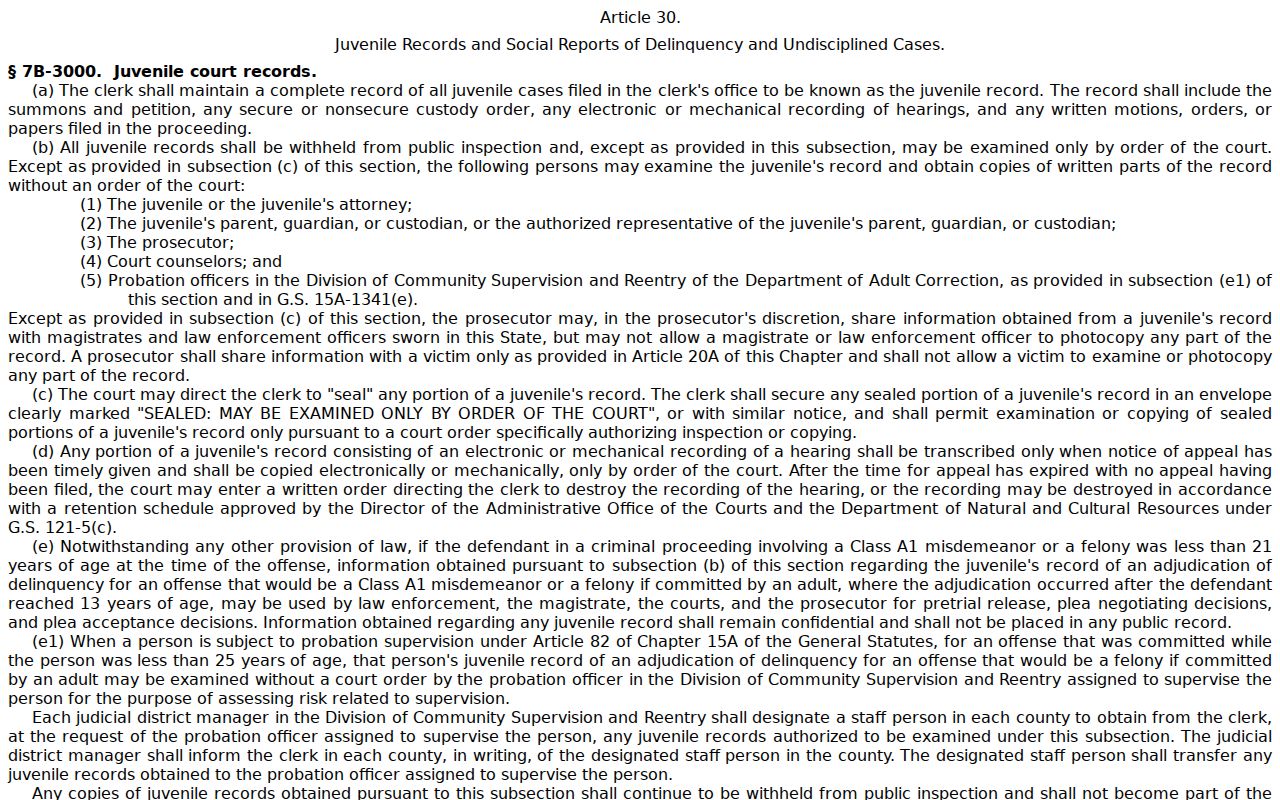
The juvenile-record source shows why public court access has firm limits even for a familiar Watauga County case category. North Carolina's expunction information explains that expunction can remove qualifying records from public view entirely.
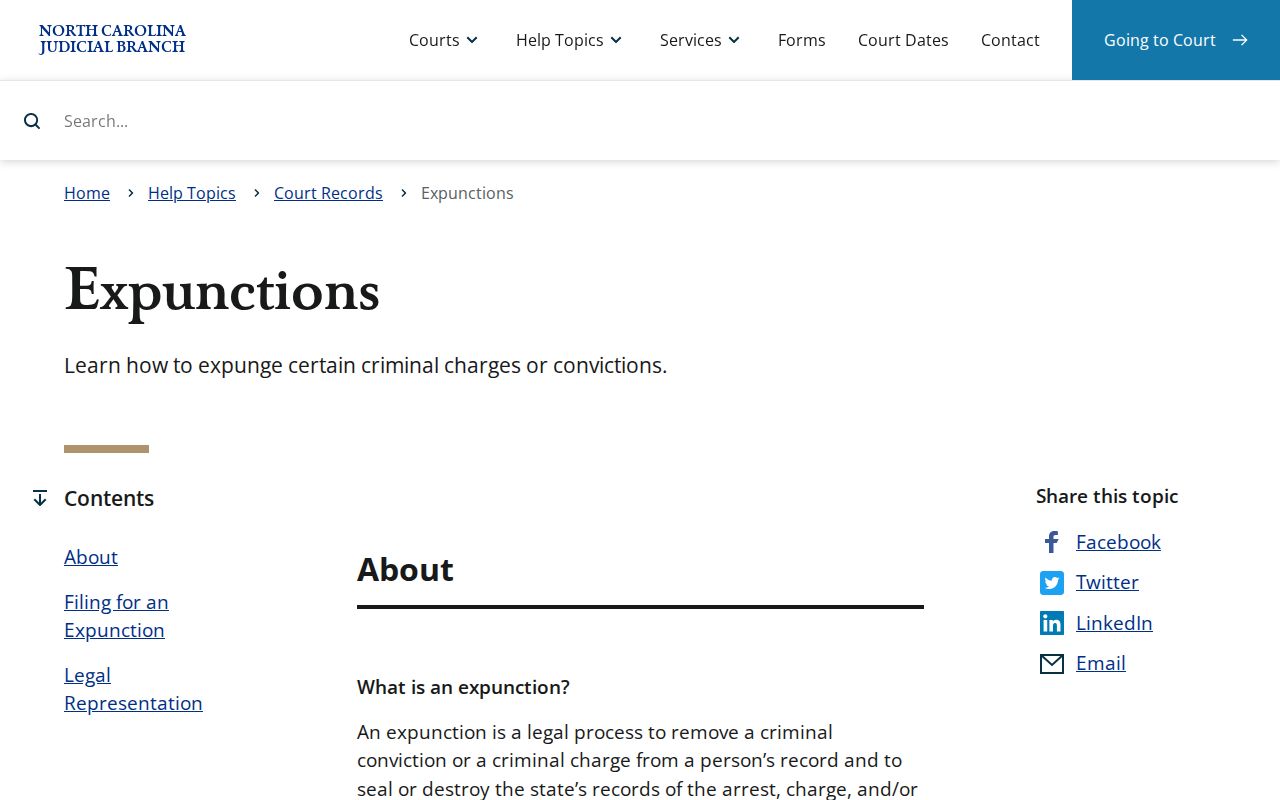
Treat expunction guidance as a reason to respect an unavailable record. It is no substitute for the court file, and it tells you nothing about what that file held.
Watauga County Transcript and Audio Requests
A written court file, a transcript, and courtroom audio are three different Watauga County records. They are not the same thing. State court-records guidance says a court reporter may be the right source for a transcript. That applies where a proceeding was recorded. Certain criminal District Court proceedings are not routinely recorded, except as the Judicial Branch describes. The Clerk can identify the route to the case record. Do not assume the office holds every spoken record.
The Judicial Branch posts forms for nonconfidential audio requests and for requests involving confidential recordings. Filing a form does not by itself make audio available. Name the case, the proceeding date, and the exact material you want. Then ask which office holds it. Ask whether access is authorized, and what the current fee is. That focus keeps you honest. It stops you mistaking a docket event for proof that a transcript or audio file exists.