
Searching Watauga County Civil Dockets
The North Carolina eCourts Portal is the official starting point. Its Smart Search tool pulls up the public Case Summary for eligible Watauga County cases. The state calls that same screen the Register of Actions. A case number from a notice or court paper is the sharpest key you can use. A party-name search works for a legitimate case-specific purpose. Narrow it by Watauga location, filing-date range, case type, and status so you do not drown in matches.
Searching the Portal is free. No account is needed. Registering mainly saves cases for later; it does not expand your rights to public records. Watch the 200-result cap, because hitting it means your search is too broad. If the right case never appears, recheck spelling, county, dates, and case type before giving up. A blank result can also point to a protected record, an expunction or seal, a remote-access limit, or something else. It may be a migration issue or a slow index. Absence is never proof that no case exists.
- Open Smart Search and select Watauga County when the location control is available.
- Enter a known case number exactly, or use the minimum party information needed for a focused civil search.
- Confirm the location, case type, status, and parties before opening the Case Summary.
- Read the Register of Actions for filings, events, scheduled hearings, and any recorded disposition.
- Contact the Clerk when a public document, certification, or terminal review is needed beyond the summary.
Watauga Civil Portal Fields
The eCourts interface splits case searches from hearing searches. Smart Search takes a case number or party name, with advanced controls for location, party criteria, case type, case status, and filing-date range. Search Hearings works differently. It has its own controls for location, hearing type, date range, and a conditional search field. Its results help you check a scheduled event. They do not tell you whether the hearing is virtual, in person, completed, or final.
| Field or route | Use for a Watauga civil matter | How to read it |
|---|---|---|
| Location | Limit a search to Watauga when the paperwork establishes that county. | A town name or address alone does not always establish the filing county. |
| Case type and status | Separate a civil search from other court categories and compare the current administrative state. | A status label is not a complete account of the case. |
| Filing-date range | Narrow a broad name result to a relevant period. | Use it with other controls because public results are capped. |
| Search Hearings | Check a scheduled setting by location, hearing type, and date range. | Confirm attendance instructions with the notice or court staff. |
Watauga went live on eCourts in July 2025. That made the Portal the main public lookup route for eligible cases. The Portal exists to view public information, hearings, eligible payments, and judgment-search functions. For filing, the separate File & Serve service handles electronic submissions where required. It is not a case-search tool and no substitute for a Clerk request.
Inside a Watauga County Civil Docket
A civil Register of Actions is procedural, not narrative. What it lists depends on the case. Entries can cover case information, cause of action, parties, assignment, events, hearings, disposition, and financial information. People often just say "docket" for that same public summary. One caution is worth keeping in mind. An event line and the document behind it can carry very different public-access status. The document might be a motion, notice, order, exhibit, transcript, or clerk's file.
| Case information | The court’s identifier, structurally represented as YYCC######-CCC, plus the case type, status, location, and assignment shown in the eligible public case summary. |
|---|---|
| Cause and parties | The public description of the action and the named case parties, subject to masking and access restrictions. |
| Events and filings | Recorded case activity such as a filed document, issued notice, order, or other procedural step. |
| Hearings | Scheduled hearing information where displayed, which should be verified before relying on a time-sensitive setting. |
| Disposition and finances | The recorded resolution and financial information where applicable, neither of which replaces the complete official file. |
North Carolina eCourts case numbers follow a pattern: two digits for the year, a letter for the case type, six sequence digits, and a three-digit county identifier. Copy the number straight from an official notice. Do not try to rebuild it from names or dates.
Watauga Civil Court Allocation
Watauga County civil cases sit inside the North Carolina General Court of Justice, split locally between Superior Court District 35 and District Court District 35. The money line comes from N.C. Gen. Stat. § 7A-243. As a general rule, that statute puts civil actions of $25,000 or less in District Court and larger matters in Superior Court, subject to statutory exceptions. Division still turns on the caption, the remedy, the amount in controversy, and the case category. Confirm it from the actual record rather than from a description of the dispute.
The official statute sets out the Watauga County civil docket jurisdiction boundary.
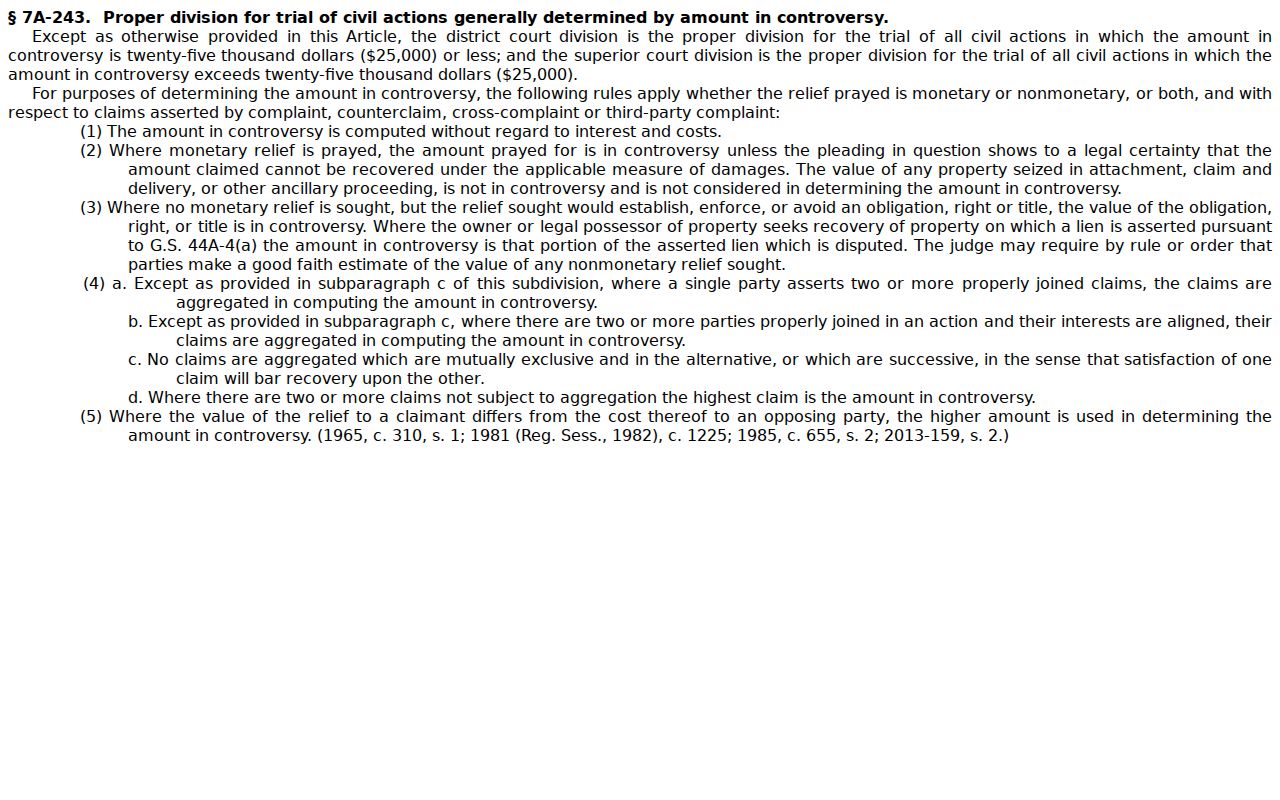
Superior Court also hears appeals from District Court. That path can produce related records in both divisions. The Register of Actions, the case number, and the disposition history are more dependable than any guess about where the case began.
Civil Case Types on the Docket
The Watauga civil docket holds more than one kind of lawsuit. Division and access both turn on the claim, the procedure, and the relief requested. The Watauga Clerk also handles original-jurisdiction matters that resist a simple criminal-versus-civil label. Keep that in mind when you search. A narrow civil-only filter can miss a public estate index result or a special proceeding. Some case types also carry separate confidentiality rules.
- District Court civil actions within its statutory jurisdiction.
- Superior Court civil disputes generally above the statutory District Court amount and appeals from District Court.
- Magistrate small claims proceedings within the statutory small-claims limit.
- Public special proceedings such as foreclosures, condemnations, and partitions handled through the Clerk’s original jurisdiction.
- Estate, probate, guardianship, competency, or adoption matters, each with its own category and potential access limits.
A Register of Actions describes a court case. A recorded deed, plat, or other land instrument does not belong there; it sits with the Register of Deeds. That distinction matters whenever a civil search turns on property-related terms.
Watauga Civil Small Claims Path
Small claims court is a District Court venue run by magistrates. The Judicial Branch's Small Claims Court guide and N.C. Gen. Stat. § 7A-210 set a general $10,000 ceiling. There is no jury trial before the magistrate. A magistrate judgment can be appealed for a fresh District Court hearing, so an early small-claims event and a later District Court appeal can be related but distinct docket entries. The guide is a solid first stop for the Watauga County civil docket small-claims route.
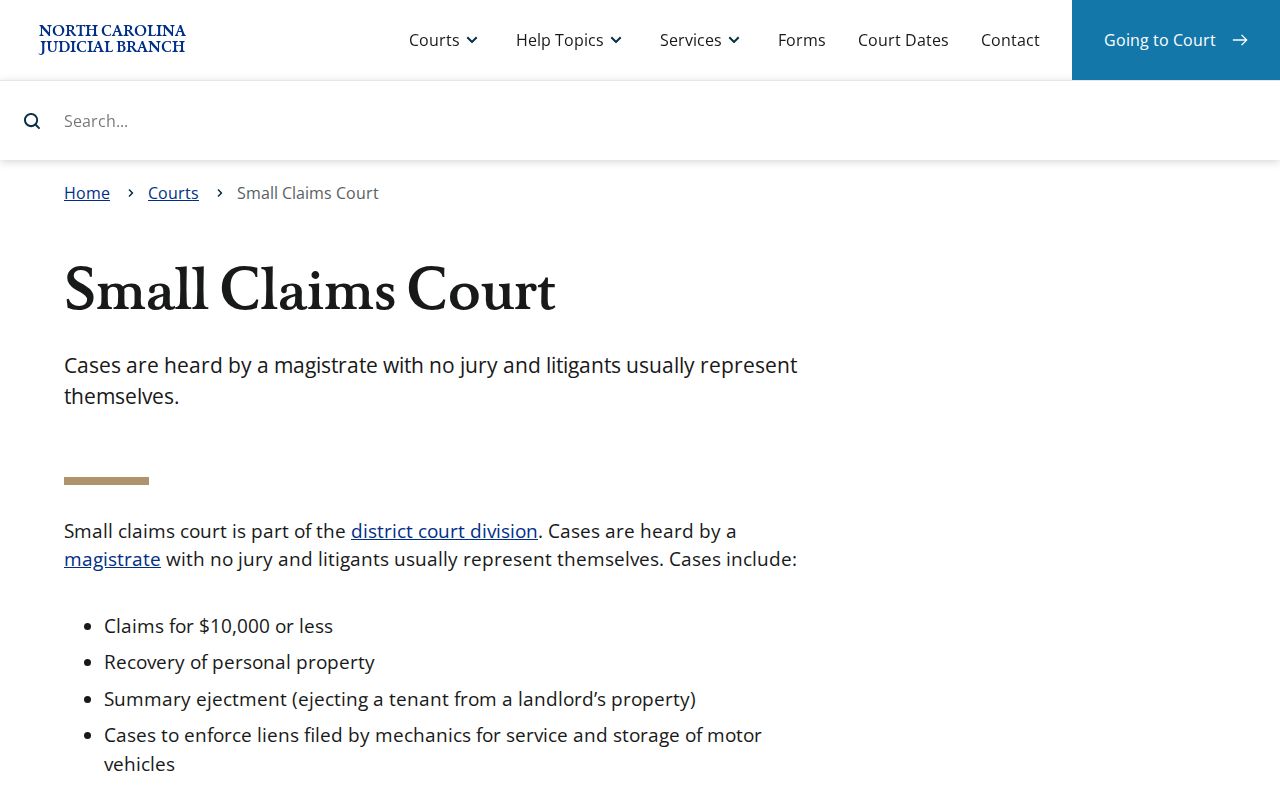
Start your Watauga County court docket search with the case number if you have it. Add both parties' names. A magistrate's small-claims record and a later District Court appeal can look like one story. But one entry covers only its own court. Match events across courts carefully rather than assuming one filing tells the whole history. What can a magistrate hear? The statute's Article 19 text spells out the small-claims jurisdiction rules behind the Watauga County civil docket.
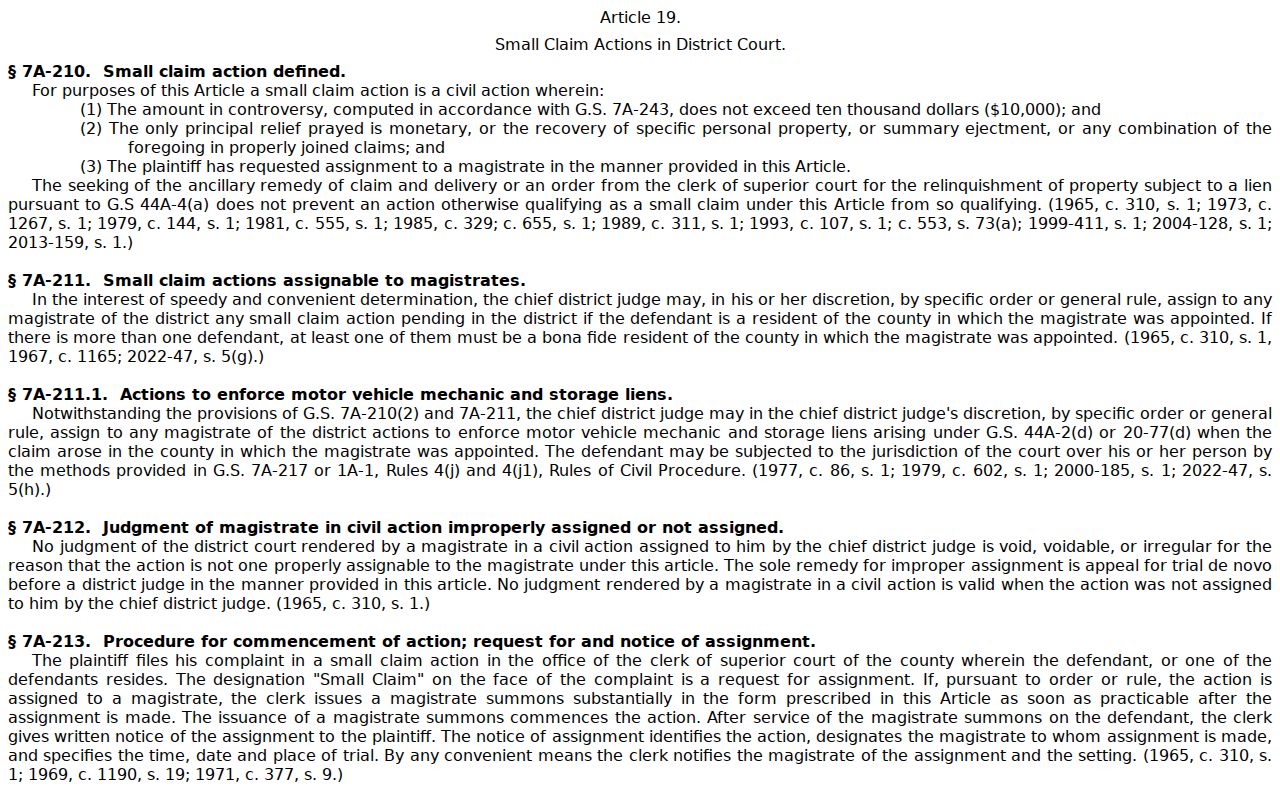
Small claims in Watauga County top out at $10,000 by statute. That number is a jurisdictional ceiling, nothing more. It says nothing about what any particular case is worth or how it will end.
Civil Docket Settings and Hearings
A date on the Watauga County civil docket is a setting, not a result. For scheduling, the Watauga Civil calendar is the official entry point. The Portal adds Case Summary and Search Hearings routes. The calendar application shows live results. Check it directly rather than relying on any date repeated secondhand. Confirm anything time-sensitive against the latest docket events and official notice.
Search Hearings lists a date, time, and location. That is as far as the interface goes. It will not tell you whether to appear in person or by video. Attendance instructions come from the court's notice or from court staff. Calendars change, too. A listing can be continued, amended, or dropped. It never shows allegations, attendance, a ruling, or an outcome.
Watauga Civil Calendar Practice
The Civil Superior local rules govern. Under the Civil Superior local rules, a Court Manager runs the civil calendar in the Watauga area. Cases usually reach the Ready Calendar five months after the last responsive pleading. An extension can push that back. Those rules set procedure, not predictions. Nothing in them makes a Watauga case trial-ready or locks in a hearing time.
Trial calendars for civil Superior Court go up online at least four weeks before the session. Supplements can follow. A case listed for a term may be called at any point in that term. Peremptory settings, statutory priority, and case age all shape the order. If a case goes unreached, it does not jump the line next session. Civil motions go through the Court Manager. Continuances are strongly disfavored, especially on trial dates.
For current civil and criminal calendar links, start with the Watauga local administrative schedules page. Then verify any time-sensitive setting with the court, the notice, or the Clerk. Check before you travel or file.
Civil Docket Access Rules
N.C. Gen. Stat. § 7A-109 puts the Clerk in charge of court records, files, dockets, and indexes. The public may inspect them during office hours. A law can say otherwise. That is the floor, not a guarantee of remote access. A civil docket event can be public. The document behind it may stay offline or restricted.
The Judicial Branch flags certain records as confidential. Juvenile matters, involuntary commitments, sealed cases, and expunged cases are examples. A missing result is not an invitation to hunt through another agency. Anyone with lawful authority to seek a restricted file should ask the Clerk or qualified counsel about the proper process.
Public-access rules:
N.C. Gen. Stat. § 7A-109 sets the Clerk’s public-inspection baseline for court records, dockets, and indexes, subject to law.
N.C. Gen. Stat. § 7B-3000 makes juvenile records confidential except where law permits access.
The public Portal does not display sealed and expunged records, and its public view masks date-of-birth information.
Note: Confirm that a specific document is public before you order a copy. General docket visibility does not settle every document-access question.
Watauga Civil Clerk Channels
The Watauga Clerk of Superior Court holds the county's existing court files. Both Superior and District Courts are covered. The office sits at 842 W. King Street, Suite 13, Boone, NC 28607. The main Clerk and court number is 828-268-6600. The courthouse keeps hours of 8:00 a.m. to 5:00 p.m., Monday through Friday. State guidance also provides public self-service terminals at Clerk offices for court-record access.
When you request something, be specific. Give the county, the case number if known, the case type, the caption where it fits, the document or docket item wanted, the date range, and whether you need an ordinary copy or a certified one. The county publishes no firm rules on email copies, turnaround times, terminal placement, or identification. So ask the Clerk about current procedure and costs. For a county case file, an NCAOC administrative public-record request is the wrong route.
Watauga Civil Records Boundaries
Civil research in Watauga County can cross record systems. The Watauga Register of Deeds keeps land records and their indexes. The Clerk keeps court proceedings. A recorded deed, plat, or land instrument is not a civil docket entry. But a judicial foreclosure or partition is different. It may sit with the Clerk as a special proceeding. Sorting the custodian correctly keeps a recorded land document from being mistaken for the court's Register of Actions. The Register of Deeds page helps here. It lays out the court-record and land-record boundary for civil docket searches.
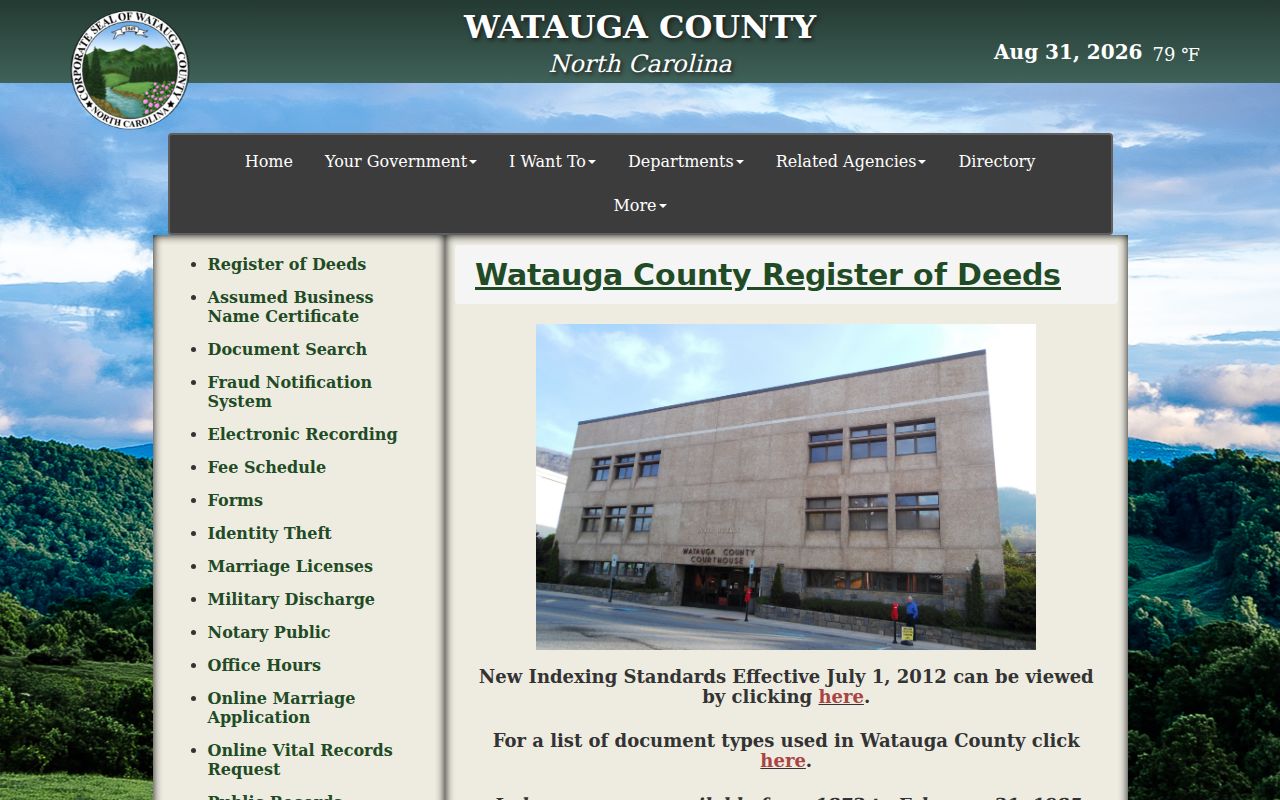
This split says nothing about whether a civil record is public. It only tells you which agency keeps which type of official record.
Watauga Civil Activity Context
The Judicial Branch posts a civil overall caseload activity report. It covers caseload activity across the state's trial courts. That report is the right place to read Watauga County civil docket numbers in context. But no Watauga filing, disposition, pending-case, or time-to-disposition figure is restated here. Treat any filing count with care. It measures how cases move through processing, not how many people, households, or outcomes sit behind it.
So use the official civil caseload report as background for a Watauga County civil docket. Never treat it as a substitute for a case-specific Portal or Clerk search. The report shows trends in filings and case flow. Your own case number still comes from the docket itself.
Using future figures: Any civil caseload number cited later should keep its full context. That means the reporting period, the court category, and the report's exact metric label. The distinction between filing, disposition, and pending status matters most of all.